Showing posts with label raw milk. Show all posts

Saturday, May 21, 2011

Yogurt Take Two

In an effort to understand nutrition, our food, our bodies and to re-create a healthy understanding of where our food comes from, and the effort and the routines it goes through to get to our table, I've tried things like making yogurt, breads, & butter.  I did not grow up understanding farm life, that someone out there grew my food or what processed or unprocessed foods are.
  I think we can agree... the less processed a food is, the better it is for you.  I love learning about food and nutrition. Mostly, I have been successful in this quest... mostly. I'm not one to follow a recipe to the tee.  I often veer off the path those directions give me.  I think that I know better.  I will think my yogurt is getting too cold and I'll turn up the heat (only to have it on too long and kill my yogurt)... I'll use the palm of my hand as a measuring spoon, only to learn I'm not putting in enough sugar, salt or baking soda.  I'll put a loaf of bread in the oven to rise in a plastic bowl... only to learn that the oven is just warm enough to melt that cheap plastic bowl and ruin all my dough (Ok, I forgot it was in there and I turned on the oven to pre-heat it for some other thing I was baking) And so, I suffer the kinds of losses that come with being a bit of a goof-up.

I've made yogurt before with lots of successes and failures scattered here and there.  We mostly only buy plain yogurt since most of the rest of the flavored stuff is chalked full of fillers like gelatin, sugar, fake sugar, and fake fruit, not to mention all the chemical additives that I both can't pronounce or spell. I usually stand in the yogurt isle at the grocery store looking at labels FOREVER.  What I look for is a full fat, not sweetened with sugar or fake sugar yogurt.  There are very few out there that I have found that are good.  Yogurt sweetened with natural fruit juices and honey, like Lil'Ones and Nature's Treat, both by Dairyland boast that they have:
  • No added sugar or fructose
  • Sweetened with fruit juice
  • No artificial sweeteners
  • No artificial flavours
  • No artificial colours
  • No gelatin
  • Has lots of real fruit pieces
On the other hand,  those Yoplait tubes.... GARBAGE.... I mean get some plain yogurt, taste it and then taste what ever it is in those tubes.  You can't get any more yogurt-less than that. Blech.

  Yogurt and cheese made traditional ways are actually tolerable to people who are lactose intolerant. High fat contents, yogurt bacteria, and the cheese fermentation process, contain lactase enzymes that actually consume lactose in cheeses and yogurt that are traditionally made.  Modern brands on the store shelves however add lactose back into their yogurts by adding milk solids or don't even reduce the lactose since they are not even made with actual bacteria... let's call them 'yogurt-like substances'.  Gelatin is used as a thickener in those cases.  Many of the yogurt and cheeses on the shelves in our stores are very high in lactose. 

It IS actually quite easy to make.... my kids eat yogurt like it's ice-cream and it gets expensive. Since it's soooo easy to make (from what I remember) I'm going to use a different recipe and try it a second time with some raw milk. I'm going to follow the directions and RESIST THE URGE TO SECOND GUESS IT. I'm going to use the light in my oven instead of a crock pot this time.

Yogurt takes a little bit of time to make. Not actual working time but time for it to sit and culture.  
If the temperature of your yogurt gets to high or to low then it will kill the culture. DON'T I KNOW IT. So it is important that during the incubation period that the temperature stays between 90 and 110 degrees.

Homemade Yogurt (modified by Kristi... woops. I did. I messed with this recipe. I said I wouldn't and I did. We'll see how it turns out. Good Grief.)  See the original recipe post here


by Crystal Miller

- 8 cups milk
- 1/3 cup powdered milk (this is optional but will make a thicker yogurt)
- 1/2 cup starter yogurt
Before you begin wash 2 quart-sized canning jars.  Have the lids ready to cover the jars when you are done.
Pour your milk into a large cooking pot. Heat the milk up to 185 degrees.

Allow the milk to cool down to 110 degrees. The cooling can take a long time. If you want to speed the process up fill your sink with cold water and place the pot of hot milk in the water and stir and stir. The temperature drops fairly quickly this way, so make sure to have your thermometer handy to keep checking.
 Whisk your starter yogurt with a cup of warm milk to get the lumps out before you add it to the pot.

After you reach 110 degrees add the starter mixture and stir until everything is dissolved very well.

Pour this mixture into your ready and waiting jars. Put the lids on and put them into what ever place you are planning to incubate and culture them.


I put mine into the oven to incubate covered in a towel. I heated the oven to 150 degrees and then turned it off and let it cool a bit.  I wrapped up my jars in a towel and put them in the oven... and I am to leave them for 10 to 12 hours; trying not to disturb the jars to much.  OK... THIS IS MY PROBLEM... I just want to babysit them too much.  Is the temperature right.... how are they doing? Is it thickening?  I HAVE TO KNOW THE ANSWERS TO THESE QUESTIONS.... grr.  I am 3 hours in to this process as I type and I have to RESIST my very 'curious, goof-up, what the Vegt?' nature and leave it well enough ALONE!  

Like... I so badly want to post the next picture in this series, but it's still HOURS away.... hours. Killing me. I need to leave the house!!!!

And, I know what you're thinking. You're thinking... "Given your track record, Kristi, it's probably a bad, BAD idea to put a towel in your oven.... you will have a fire for sure. Please, please do not make this a habit."

Duly noted.


Stay tuned for the results.  If I don't post them by this time tomorrow, would someone please phone the fire department. Please?

Sunday, May 8, 2011

Sprouted Whole Grain Bread

After I made my first batch of butter I was left with the liquid I've been assured is indeed buttermilk.  The only thing I was sure I could use it for was to make bread.  I let it sit on the counter so that it would warm to room temperature, and I set out to find a Whole Grain Bread Recipe that used buttermilk.

This week I made a visit to Anita's Organic Grain and Flour Mill in a tiny little hamlet called Greendale, 10 minutes from Chilliwack.  I picked up some stone-gound Sprouted Whole Grain Flour and some stone-ground Organic Kamut Flour (which I pronounced wrong the entire time I was in the store).  My intention is to add a bit of it to the bread that I make.  I've been making about half the bread we consume since Christmas and I hope if I can get the hang of it that I'll be making all of it.  I won't put that kind of pressure on myself just yet, but that's the goal.  My bread consists of mainly 4 or 5 natural ingredients.... and since I've been avoiding processed foods and especially anything with corn or soy in them, I am finding that making my own bread is more than worth it.  The Sprouted Grain and Kamut flours (among a host of other natural, unprocessed, heritage flours) are higher in fibre and nutrients and overall are just so much healthier for our bodies.

Thank-ful for my days cooking for a bunch of wild tree-planters.... where if I wasn't good at baking bread, I sure practiced.


Buttermilk Whole Wheat Bread from Bernard Clayton's New Complete Book of Breads
makes 1 9"x5" or 2 8.5"x4.5" loaves
Ingredients
 2 teaspoons instant yeast
3/4 cup warm water (105-115F)
1-1/4 cups buttermilk, room temperature 
1/4 c oil
1-1/2 cups white flour, approximately
3 cups whole wheat flour, (I used stone-ground sprouted)
2 tablespoons brown sugar or molasses [I used molasses]
2 teaspoons baking powder
2 teaspoons salt which I forgot to add :(
Step 1 - In a large mixing bowl sprinkle the yeast over the warm water and stir briefly to dissolve. Set aside while allowing the buttermilk to reach room temperature.
Step 2 - When at room temperature, pour the buttermilk, bread flour, 1 cup whole wheat flour, oil, brown sugar or molasses, baking powder, and salt into the yeast mixture. Blend at low speed (LOW people... I turned mine to the '2' and had flour spurt up all over my kitchen and newly washed dishes... like I want to wash them TWICE. argh!)

 in a mixer until the flour and the dry ingredients are absorbed. With the bread hook stir in the remaining whole wheat flour, 1/2 cup at a time, and, when it becomes thick, work with the fingers. Allow 4 to 5 minutes for the whole wheat flour to fully absorb the liquid before adding more flour. The dough will be slightly sticky and soft.  
Step 3 - Cover in oil and let rise in a warm place until double (1 hour at least)
Step 4 - Punch down and shape into loaves, tucking the ends in. I always use parchment paper.... there's no hassel getting the loaves out of the pan that way. Let rise another hour. For a really beautiful crust, brush on a beaten egg.
Step 5 - Preheat oven to 425F 20 minutes before baking.

Step 6 - Bake the loaf or loaves in the oven until they are golden brown and loose in the pans, about 30-35 minutes.  The loaves are baked if the sound is hard and hollow when thumped on the bottom crust.  
Step 7 - Remove loaves from the oven and place on wire racks to cool.

Saturday, May 7, 2011

I can't believe it's BUTTER!

Just made my own butter.  WHAT THE VEGT?! I HAVE HAD A SUCCESS!


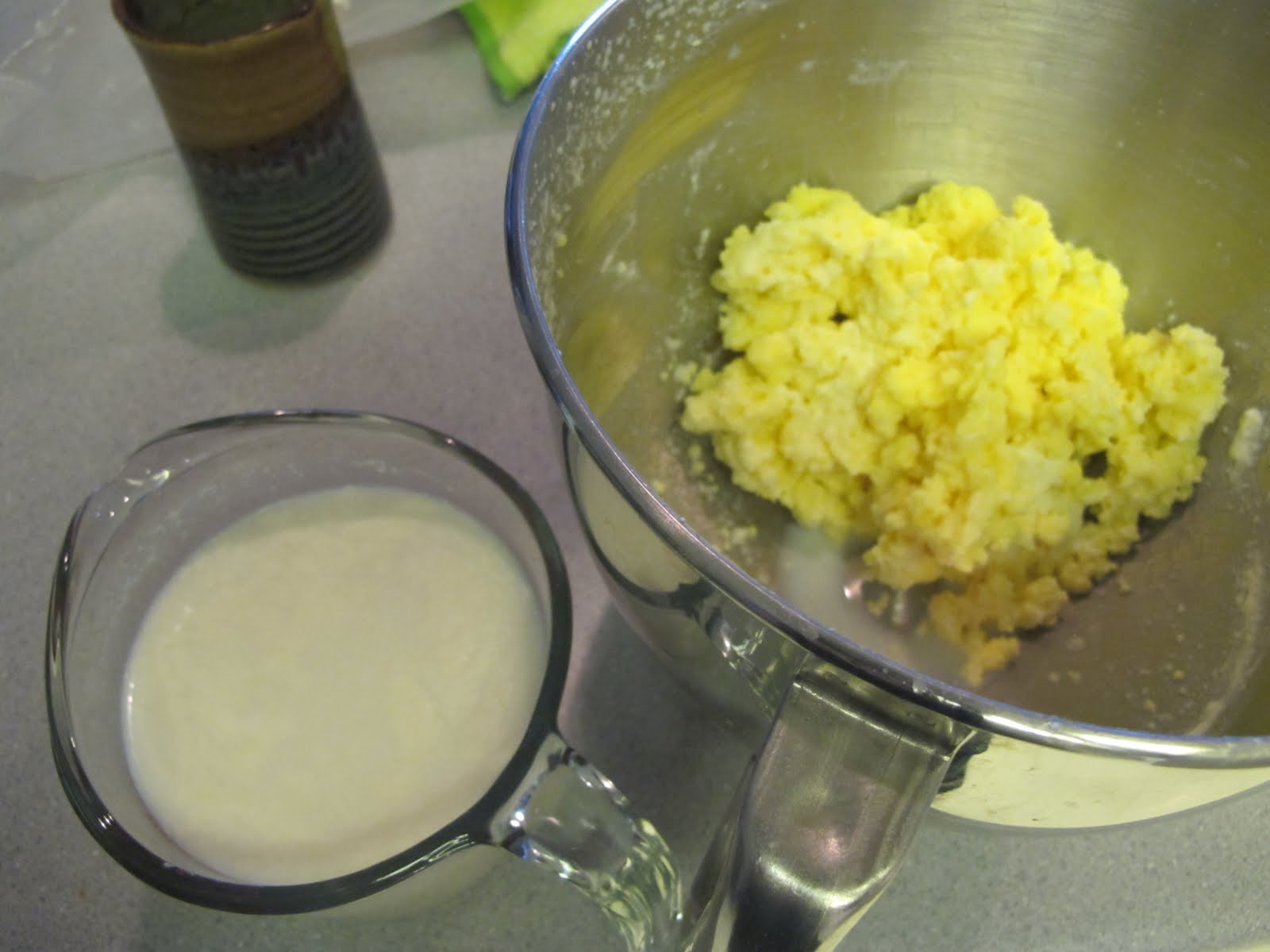
You can see the cream separated from the milk. I've already skimmed off more than half the cream.

Getting ready to whip in my Kitchen Aid

Skimming

Whipping.

Getting Thicker.

Whip Cream.

Even thicker.

I added salt at this stage.  I probably should have waited and just added it to the butter.... because what happened next surprised me. (Rookie that I am)
The Butter is separating from what I'm guessing is Buttermilk.

LOOK AT IT! I ACTUALLY DID IT!!!

draining the buttermilk from the butter

Now I have salty butter milk and salted butter.  

CAN YOU BELIEVE IT?!
I just made butter!

I will NOT learn how to make Dutch Pancakes

What can you make with fresh raw milk and fresh free range eggs on a Saturday morning.  If you're my husband, you'd make Dutch Pancakes.  Crepes really. With homemade Maple Syrup from my mom's neighbours in the town of Parry Sound in Northern Ontario where I grew up.  I could post the recipe, but it's always been my goal to never learn how to make them. I don't have the recipe. That little bit of advice came from my mother-in-law 11 years ago and it's advice that I've never questioned.  She told me she had her future daughter-in-laws in mind when she taught both her boys to make Dutch Pancakes.  One of us has never learned.... the other has never had them made for her again.  (ok, I don't know that for sure, 100%, but I do know she regretted learning almost immediately)

This is my dutch pancake making hero.


When I was given some more raw milk, I decided not to waste it on trying to make yogurt quite yet.  My fridge actually only has raw milk in it now and so we need the milk for drinking.  It's so cool to see the milk and cream separating.  I have one jug of milk from a jersey cow and the amount of cream in that jug is almost double the amount in the other jug... and it is slightly more yellowish in colour.  This is the cream I plan on making into butter.  

I knew the fresh eggs and fresh raw milk would be better for us with their higher nutrient content, but I didn't think they would actually make things taste differently. OH MY WORD. Those were the yummiest, tastiest, freshest pancakes I've ever consumed. They did taste different.  They were rich, creamy, perfect in texture. They were the best Dutch Pancakes EVER!!!  They tasted, well... fresh.   

I'm looking around to see what I can take a picture of... but it's too late.  Those pancakes are gone. Long gone. Next time I'll remember to get out my camera and post pictures of the process.

Imagine a Bed and Breakfast boasting of it's farm fresh breakfasts like this.  Add in a little bacon from the pig we raised and I think we'd have a booming business.  

Tuesday, May 3, 2011

Canuck Overtime Totally killed my Yogurt

I used to make yogurt in my oven. I had a gas stove and so the pilot light in the oven was always on. Perfect for making your own yogurt. There isn't anything easier to make. Take some milk, whisk in some plain yogurt and let it sit in the oven with only the heat from the pilot light for 8 hours and TA DA!! Homemade Yogurt.

My friend (life-saver) Marie came over this morning so that I could go to the Mother's Day Tea with Wesley at Garden Gate Preschool. She brought with her 2 Litres of Raw milk from her newly acquired dairy farm. I was thrilled, but I had just bought about 8 Litres of milk (because my kids only have the option of milk or water at home), so I knew right away that I HAD to try making yogurt with my crock-pot. I found a crock-pot yogurt recipe about a year ago and hadn't tried it yet.

I got out my meat thermometer, because I knew I would have to keep an eye on the temperature. I meant to follow the directions. But I thought I knew better. After all, I'm a VETERAN YOGURT MAKER. Just a little out of practice. I did follow MOST of them... until.... I took the temperature of the fermenting yogurt mixture and it was less than 110 degrees. Yogurt has to be incubated between 110 and 120 degrees to be just right. (perfect gas oven pilot light temperature). So in a moment of thoughtless panic, I thought I'd plug in my crock-pot just to warm it up just a tiny bit. Wellll.... then I got caught up in Canuck overtime and completely forgot about the yogurt on the counter in the crock-pot that was PLUGGED IN!!! WHAT THE VEGT?!?!? At 10:45 into overtime Ryan Kesler scored the winning goal for Vancouver and I.... remembered my yogurt.

I killed it. Murdered all those lovely yogurt cultures... the Lactobacillus acidophilus, Lactobacillus bifidus and Lactobacillus casei... all of them.... dead. The yogurt was supposed to sit all night in the UNPLUGGED crock pot insulated to set.... and Canuck overtime totally killed my yogurt. 10 minutes was all it took for my yogurt to get to 140 degrees. 20 Degrees over the maximum. I could tell right away. GLOP. Total Glop. Clear runny liquid separated from all the thick DEAD glop on the bottom. My 'What the Vegt' debut story, humiliated.... and perfect all the same; a fitting illustration of my life, my blog title, and my rookie hobby farm owner. To top it off, I feel completely guilty and mortified and heartbroken that I totally (wait, I'm blaming the Canucks aren't I? If you boys could just win one in regulation time my cooking, blogging and life would be so much better).... I feel totally wretched that I wasted and ruined my lovely gift of raw milk. Sorry Marie. The Canucks will be so sorry.

Determined to try again.


Dry Enchilada Sauce Mix

So I recently came upon Jamie Oliver's Food Revolution show. I know. It's old, but I just found it so that makes it noteworthy. It's inspiring. Over the last year or so I've strived to buy and use less processed foods and to serve foods without packaging, without processing. Raw. Since moving to 2.5 acres in the Lower Mainland last June... just 10 months ago, we've raised our own chickens, pig, bought a side of beef, started a garden and have big BIG plans to raise our own meat, perhaps a dairy cow (aside: did you know you get 16 plus litres of milk FROM ONE COW!!!? What would I DO with all that freaking MILK?!), get a llama, some sheep or goats. We're not sure....when we moved in, the entire house was stuck in the 70ies... that little point deserves and entire post dedicated to it. For tonight, I'll just repeat a facebook post that I made.
When I look up a recipe on the internet, what I find really frustrating is reading on the ingredients list: "1 package dry enchilada sauce mix". I mean, that's why I looked up the recipe. I WANT TO MAKE IT! I don't want a package.... that's why I looked up the recipe. Duh.